Showing posts with label Memorials and Icons. Show all posts

Saturday, December 11, 2010

Millennium Library - Andrew Carnegie Portrait

Carnegie Portrait
Title: Andrew Carnegie Portrait
Location: Millennium Library, 251 Donald Street (Map)
Unveiled:
October 1905, (re-dedicated October 2005)
Cost:
$550
Artist:
Victor A. Long


The portrait that now hangs prominently in the Millennium Library had a rocky history.

The artist is Victor Arthur Long. Born in 1866 in Fort Erie Ontario, Long studied art in Europe for four years before returning to Canada and setting up shop in a studio on Main Street around 1887. He became well known for his portraits, including some high profile works capturing royalty to premiers, merchant princes to prominent clergy.

In 1905 Winnipeg was about to open its first central library. Up until this time libraries were mostly private institutions open to people who belonged to that club or a university. The Historical and Scientific Society of Manitoba (forerunner to the Manitoba Historical Society) offered a public lending room in a cramped space in city hall.

Former Carnegie Library

The librarian at the city hall book room applied to the Carnegie Foundation of New York, requesting funds to build a central library building. Andrew Carnegie, industrialist turned philanthropist, was responsible for funding the construction of hundreds of libraries around North America by this time.

The city received a $75,000 grant providing that it set aside the necessary land and agreed to pick up the annual operating costs.

Re-dedication by Mayor Katz, Oct. 2005: (Source)

Weeks before the October 1905 opening city council got a surprise at their monthly meeting.
Unveiled before them was a huge mural of Andrew Carnegie by Victor Long. The artist had painted it without commission and offered it to the city for unveiling at the opening ceremony for the sum of $550.

If Long was expecting accolades, he did not get many that day.

Alderman Latimer felt that such a picture was a poor choice, saying that Carnegie had donated to this fine building and that to honour him with a pricey portrait "making him look like a fashion plate" was unnecessary. Others questioned whether the portrait was of Carnegie at all, given that none of them had ever seen the man in person. Alderman Cox exclaimed "It's nonsensical! We're buying a picture and we don't even know if it is a good likeness."

In the end, the artist got his $550 and the portrait was purchased. (source: Manitoba Free Press, Oct 3, 1905).

Debate again erupted days later when the purchase came up at a labour meeting:

The question was one which brought out considerable fire, and some strong words were used to emphasize the feelings of the delegates.” They struck a committee to get legal advice to see if they could get an injunction to stop the city from “being so free and easy with the ratepayers cash”. (The Voice, Oct 6 1905).


The portrait hung at the library for nearly seventy years. In 1977, after the facility was closed and the contents moved to the new Centennial Library, a reporter noted the massive portrait in the boiler room leaning against a wall. It had been ‘banished to the basement’ a number of years before and was not going to the new facility.

The following year a small branch library opened inside the William Avenue building and the majority of the space became storage for the city records department. Carnegie's portrait remained in storage.
Millennium Library

In 2005, the centenary of the Carnegie Library building, the portrait was restored and rededicated. It now hangs in Winnipeg's Millennium Library on the south staircase overlooking what will be Millennium Library park.

A smaller Carnegie inside St. John's Library

Long moved to Vancouver in 1910 but made annual journeys across the prairies, stopping in major centres to collect new commissions. His works He died in 1938.

Carnegie's initial donation was not his only involvement in the Winnipeg Public Library system. A few years later he funded an expansion of the William Avenue building. In 1915 he contributed $35,000 for the construction of The St. John’s (Salter Street) and Cornish (West Gate) branches.

He did not attend the opening of any of the Winnipeg buildings but in 1907 on the occasion of the opening of the Washington D.C. public library, the 730th he funded to that time, he said:

“Free libraries maintained by the people are cradles of democracy, and their spread can never fail to extend and strengthen the democratic idea, the equality of citizens, the loyalty of man.” 

Carnegie funded the construction of 2,500 libraries in his lifetime. His foundation still gives millions of dollars each year toward educational projects around the world.

For more on Victor Long, see my West End Dumplings post.

Sunday, November 7, 2010

Legislature Grounds - Soldier's Relatives' Memorial

Leg
Title: Winnipeg Soldier's Relatives' Memorial
Location:
Broadway and Osborne, Legislature Grounds
(Map)
Unveiled:
May 13, 1923

Cost: $16,000
Artist: Marguerite Taylor

Background:

October 30, 1920, Winnipeg Tribune

In the autumn of 1920 a group called the Winnipeg Soldier's Relatives' Memorial Association was formed with the intention of creating a monument to Winnipeg's war dead. Their first general meeting took place on November 3, 1920 at the offices of the Winnipeg Board of Trade on Main Street under the leadership of former Mayor and president of the Manitoba Bridge and Iron Works Limited T. R. Deacon.

Details were still to be worked out, but two things that they insisted upon were that it have a prominent place in the city, within 8 miles of Portage and Main, and that it include the name of every person from the Greater Winnipeg area who was killed in the First World War.


March 8, 1921. Winnipeg Free Press

The organization spent a year researching and compiling the names of war dead. This included a big public write-in campaign geared at local families. They also spent $1,000 to have researchers in Ottawa comb through death records to make sure that those without relatives in the city were not. The campaign wrapped up on November 1, 1921 with a two day phone-in blitz. 

In the end, almost 1,600 names were collected. This number changed a couple of times after the initial figures were released, right up to year of the unveiling and one addition after the monument was erected. The final number appears to be 1,658.

Taylor. April 13, 1963, Winnipeg Free Press

As the names were being compiled there was, of course, the matter of the monument itself.

Architect Colonel J. M Semmens of the 78th Battalion, Winnipeg Grenadiers was chosen for the design. 

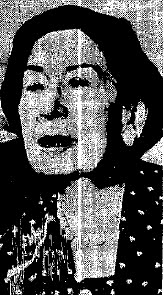
The artist chosen was Marguerite Taylor. Mrs Taylor was born, raised and trained in Paris as Marguerite Jud. She met and married husband Hilliard Taylor, a Canadian businessman based in London, and the couple settled in Winnipeg in 1904. Her sculptures can be seen all over the world, from Reykjavik to London and Philadelphia to Prince Albert, SK. Another local sculpture that may be familiar is the Peguis monument in Kildonan Park.

Taylor went to England for six months to work on the piece. She later told the Tribune about the inspiration for the figure:

...the time peace was declared, when the victorious soldier threw his rifle into his left hand and triumphantly whirled his tin hat in the air. I wanted to do a happy soldier so the bereaved wives and mothers would not be too much saddened when they looked at it.” (source).

The statue was cast by Burton and Co. of London in January 1923. The bronze tablets containing the names were produced by Henry Birks and Sons in Montreal. The stonework was by Wyatt and Ireland of Winnipeg.

May 7, 1923, Winnipeg Tribune

The monument was unveiled on May 13, 1923, Decoration Day. That year's Decoration Day parade was said to have been the largest parade ever seen in Winnipeg and thousands jammed the Legislature grounds for the dedication.

Justice Dennistoun spoke of the importance of the monument:


"Whosoever in the future learns from this monument that 1619 men and women of this place sacrificed their lives in the late war will have cause for astonishment. That a comparatively small community in Canada, thousand of miles from the battle-grounds, should mourn 1619 dead, is in itself a fearful commentary on the hideousness of war, and a warning to those who come after to strive with all of their might for the avoidance of a like fate in future". 

May 14, 1923, Winnipeg Free Press

The cost of the monument was estimated at $25,000. It appears that much of the fundrasing went on behind the scenes, as there is little mention of it in the newspapers. Various service organizations, including the Kinsmen, raised money. The committee itself, which eventually numbered nearly 1,000, had a large contingent of local businessmen who, presumably, contributed and arm-twisted colleagues.

 Ceremony. Winnipeg Tribune, May 18, 1942

This memorial was the setting for a Winnipeg Soldier's Relatives' Association ceremony each Decoration Day until the mid 1950s. The ceremony usually consisted of a procession marching from All Saints Church, a short eulogy, a song by the All Saints choir, taps and the laying of flowers by relatives or for those who sent a flower to Winnipeg to be laid. 

It was also the scene for many intimate commemoration ceremonies such as family gatherings. On June 28, 1924 the nursing sisters held a memorial to those killed on the hospital ship Llandovery Castle six years earlier. On the morning of the start of the National Chapter of the Daughters of the Empire conference in Winnipeg, a wreath was laid before the meetings began.

The final Decoration Day Ceremony appears to have been held in 1956. 

Winnipeg Downtown


TO THE IMMORTAL MEMORY OF THE MEN AND WOMEN FROM WINNIPEG WHO GAVE THEIR LIVES IN THE GREAT WAR, 1914-1918. THEY DIED THE NOBLEST DEATH THAT MEN MAY DIE FIGHTING FOR GOD, TRUTH AND LIBERTY.

IN THE MORNING AND AT THE GOING DOWN OF THE SUN WE WILL REMEMBER THEM.

ERECTED BY THE LIVING HEARTS OF KINSMEN

Related:
Dedication Program Soldier's Relatives' Memorial Association
Next of Kin Monument Manitoba Historical Society
List of all names that appear on the monument

Sunday, August 1, 2010

Broadway - Replica Streetcar 596


Title: Replica Streetcar 596, "Nellie"
Location:
Broadway b/t Fort and Garry Streets
(Map)
Unveiled:
May 23, 2009

Artist:
David Hewlett, designer

Background


Strike! on Main
The replica of Winnipeg streetcar 596 was built by members of I.A.T.S.E. Local 63 (Manitoba Theatre Centre) for the May 23, 2009 outdoor performance of Strike! the Musical.

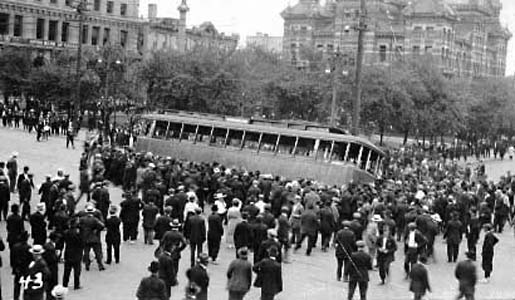
The original 596 was the streetcar set loose down Main Street during the big protest march of June 21, 1919 . On the second pass protesters pulled it off the track and set it alight. This incident sparked the Bloody Saturday riot and created an iconic image of Winnipeg's history.

The Forks
Since that time the streetcar has been used as a promotional tool for the musical, spending part of the winter at the Forks. In the summer of 2010 it was placed on the north side of Broadway between Fort and Garry Streets, land owned by Cambrian Credit Union.


The interior contains numerous photographs and information panels about the strike and Winnipeg's streetcar history. The car is open daily from 9 am to 6 pm until September 27, 2010. Admission is free.

Night on Main Street

Related:
Strike! The Musical
Winnipeg Streetcar 356 Restoration Project
Winnipeg Streetcar image slide show

Friday, July 16, 2010

Memorial Boulevard at Colony Street - Lord Selkirk Monument

Lord Selkirk Monument
Title: Lord Selkirk Monument
Location:
Memorial Boulevard at Colony Street
(Map)
Unveiled:
October 1955

Artist:
Roy Sellors

The triangular piece of land at Colony and Memorial was given to the city by the Hudson's Bay Company likely in the early 1920s. At the time, there was a land swap involving the province, city, and HBC that created space for Memorial Boulevard, an extension of St. Mary Avenue to the east, and enough land so that the HBC could build a new department store.

The desire to construct a monument to commemorate Lord Selkirk in Winnipeg began in the early 1940s, perhaps to coincide with his designation as a person of national historical significance in 1943. The war, however, put the fundraising campaign on hold for a decade.

On August 17, 1953, city council approved an application from the Manitoba Historical Society and Historic Sites and Monuments Board of Canada to build the Selkirk monument at this site.

Selkirk Monument

The design chosen was that of
architect and U of M professor Roy Sellors.

It is a Tyndall stone wall 23-feet in length and three feet high that contains the passage,
"Neither a wild and visionary scheme nor a cloak to cover aggression"  from a letter written by Selkirk in the month of his death.

Convalescing in the south of France, Selkirk was troubled by the fact that the
British government was pressuring the Northwest Company and Hudson's Bay Company, to merge their lands. Selkirk, an HBC man, felt the merger cold have a negative impact on the settlements. The entire passage reads:

"With respect to giving up the settlement or selling it to the North West Company, that is entirely out of the question ... I know of no consideration that would induce me to abandon it. I ground this resolution, not only on the principle of supporting the settlers whom I have already sent to the place, but also because I consider my character at stake upon the success of the undertaking, and upon proving that it was neither a wild or visionary scheme nor a cloak to cover sordid plans of aggression, charges which would be left in too ambiguous a state if I were to abandon the settlement at its present stage, and above all if I were to sell it to its enemies." (source).


June 23 1962, Winnipeg Free Press

the city revamped the land around the monument in 1962 by adding sixteen linden trees, benches, and a cobblestones.

In 2004, a plaque to honour
Peter Rindisbacher a young artist who lived at Red River from 1821 - 1826 and one of the first Europeans to document life in the new settlement through art, was added.

Sunday, June 27, 2010

The Famous Five Statue

The Famous Five
Title: The Famous Five
Location:
Manitoba Legislature (west grounds)

Unveiled:
June 18, 2010

Artist:
Helen Granger Young


Background

Nellie McClung lived in Manitoba for nearly 35 years and began her campaign to get Manitoba women the vote in 1912. In 1916 Manitoba became the first province to grant women this right.

The 'Famous Five', McClung along with Emily Murphy, Henrietta Muir Edwards, Nellie, Louise McKinney and Irene Parlby, made their mark a decade later when they asked the Supreme Court to define what "persons" were under the BNA Act. The definition to that point meant 'males' which kept women from voting or holding public office. In the end, they won their appeal to the Judicial Committee of the Privy Council and on October 18, 1929 the definition of persons was changed to include both men and women.
The Famous Five
In 2003 the Nellie McClung Foundation was created through a private member's bill to educate the public about the work of the Famous Five and women's issues in general. The starting off point was the creation of a public monument.

This is not the first statue to the Five. There is one in Calgary's Olympic Park and another on Parliament Hill, the latter is the only one on the grounds not dedicated to a federally elected representative.

"Never retract, never explain, never apologize - get things done and let them howl."
Nellie McClung (1873-1951)

Related:
The Famous Five Foundation
Nellie McClung Foundation
The Famous Five Library and Archives Canada website
Women Win the Vote Manitobia.ca

Media:
Nellie McClung statue unveiled in MB CBC.ca
Famous Five named honourary senators
The Persons Case, An Endearing Symbol Journal of Heritage Stewardship
Honour McClung Winnipeg Real Estate News

Wednesday, June 23, 2010

Legislature Grounds - Kwakiutl Totem Pole

Kwakiutl Totem Pole
Title: Kwakiutl Totem Pole
Address: Manitoba Legislature, south grounds
Unveiled: July 20, 1971

Artist: Henry Hunt


Background:


This six-metre tall cedar totem was commissioned by the B.C. Centennial Commission and presented to Manitoba to celebrate the 100th anniversary of B.C.'s entry into confederation.

Kwakiutl Totem Pole

The base shows a chief wrapped in a ceremonial blanket, representing the foundation of the Kwakiutl people of Vancouver Island. It is topped by the Thunderbird, a symbol of power and strength.
Artist Henry Hunt (1923 - 1985) worked in a number of mediums and became chief carver for the First Nation. That artistic tradition is carried on by his four children, including Richard Hunt, and his grandchildren, such as Tony Hunt Jr.

July 21, 1971, Winnipeg Free Press

The unveiling took place on July 20, 1971 by Lieutenant Governor John McKeag. Also in attendance was Premiere Ed Schreyer and Patricia Jordan, BC MLA for North Okanagan.

By the turn of the century the totem was worn by the elements and rot had set into the wood. Local artist Dwayne Ball approached the Legislature with a plan to repair and restore it. In 2006 he spent four weeks on site doing just that.

Saturday, June 12, 2010

555 Main Street - The Little Black Devils Volunteer Monument

Little Black Devils Memorial

Title: Little Black Devils Volunteer Monument
Address: 555 Main Street
Unveiled: September 28, 1886

Design:
Samuel Hooper

Sculptor: Robert Reid

Background


Minto Armouries

The Little Black Devils monument has been a fixture on Main Street since 1886.

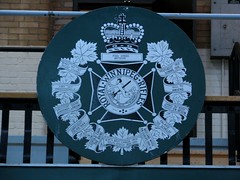
It commemorates the volunteers of the 90th Winnipeg Battalion of Rifles who died in the 1885 Northwest Rebellion at Fish Creek and Batoche, Saskatchewan. Little Black Devils is a nickname still used by proudly by the regiment as it was given to them by the enemy. During one of the rebellion's battles, a Métis military leader is reported to have said: "The red coats we know, but who are these little black devils ?" (Source)

Over time, the name was shortened to 90th Winnipeg Rifles then, in 1935, King George granted them permission to use the prefix Royal. The Rifles went on to serve in both World Wars and are based at the Minto Armouries in St. Mathews Avenue. (For more about their history.)

 Little Black Devils Monument

In 1885 a private fund raising committee chaired by James Ashdown raised just over $5,000 for this monument which would stand on the front lawn of city hall. The design chosen was by architect Samuel Hooper. It stands 50-feet tall, most of which is a fluted stone column that is 2.5-feet in circumference. The column is set into a marble base and is topped by a 9-foot tall rifleman weighing over 3,000 pounds.

In February 1886 the work was tendered. The stone for the project was quarried at Selkirk and the statue was carved by sculptor Robert Reid of Montreal.

The committee's intention was to unveil it on Dominion Day, but the “ponderous form of a rifleman” didn't  arrive in the city until August. A Free Press reporter who got a sneak peek when the crate was opened noted that “The work has been very well done and the statue presents a very handsome appearance.”

The following week it was place atop the waiting column covered in a white sheet, as was the marble base, so that the public could not catch a glimpse.


Top: September 28, 1886, Manitoba Free Press
Bottom ca. 1886, (Winnipeg Tribune Archives)

Lieutenant Governor Aikins unveiled the monument on the front lawn of city hall on September 28, 1886 in a ceremony that included music and military marches.

Inscribed into a marble tablet on one side of the base are the words: “Erected by the citizens of Winnipeg – 1886. In Memoriam. Fish Creek, Batoche” and on another are the names of  those who fell: Swinford, Code, Ennis, Ferguson, Frazier, Hutchison, Hardisty, Wheeler and Watson.

http://commons.wikimedia.org/wiki/File:City_Hall_and_Volunteer_Monument,_Winnipeg,_MB,_1887.jpg
Emailing: Centennial Concert 
Hall
Top: ca. 1887 (Wikipedia / McCord Museum)
Bottom: ca. 1964, monument at left, (Winnipeg Tribune Archives)

When the old city hall was demolished the monument was removed and incorporated into the site of the Centennial Centre, between what would be the Manitoba Museum and Centennial Concert Hall. When replaced, it was turned so that the rifleman is facing Batoche.

Saturday, April 17, 2010

Odeon / Walker Theatre Mural

Walker
Title: Untitled
Address:
364 Smith Street (south side) Map
Unveiled: 1972

Artist:
Winston Leathers

Background


Artwalls was a national art program in the 1970s sponsored by
Benson and Hedges Tobacco Company to 'enhance the urban environment' by painting murals in high traffic areas of Canada's main cities. In the summer of 1972 they teamed up with the Winnipeg Art Gallery to choose three finalists for Winnipeg's downtown: Bill Lobchuk, Bruce Head and Winston Leathers.

This was Leathers' creation. Unfortunately, I cannot find information about the locations of the other two murals.

Related:
364 Smith Street
The Murals of Winnipeg

Sunday, April 11, 2010

U of W Gateway and Transit Project

Gateway and Transit Project
Title: University of Winnipeg Gateway and Transit Project
Address: 480 Ellice Avenue at Balmoral Map
Unveiled: 2010

Artist:
David Perrett

Background


In December 2007 Perrett won the commission to create a bus shelter and installation near the Ellice Avenue entrance of the University of Winnipeg. It is part of the University of Winnipeg Gateway and Transit Project, a joint program between the Winnipeg Art Council and University.

September 2009:
New Art
New Art
October 2009
:
U of W
The shelter was unveiled in late 2009 while the 635 kg limestone cube was finished under tarps over the winter.
Gateway and Transit Project

Related
Bus Stop as Art Unveiled Winnipeg Free Press Jun 2, 2010

Public Art Balancing Influences PegMag
Photo of the artist in action Winnipeg Free Press

Tuesday, February 2, 2010

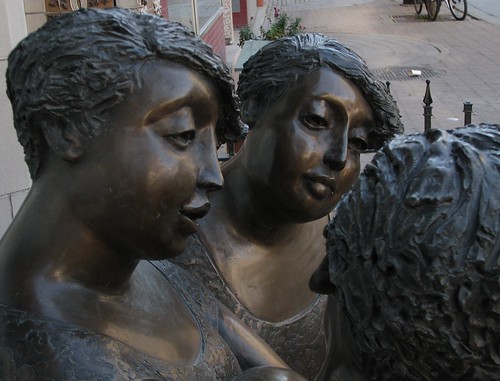
Gossipers


Title: Les chuchoteuses (Gossipers)
Address: MOVED TO ALTONA MB in 2012
Unveiled: 1985
Artist: Rose Aimee Belanger

Background 

These are not the only gossips in Canada ! They also appear in Old Montréal !

Tuesday, November 17, 2009

Justice

Justice
Title: Justice
Address: York Avenue and Kennedy Street Map
Unveiled: 1985
Artist: Gordon Reeve

Background

Justice was chosen along with four other works in 1982 to adorn the extension to the Law Courts building.

At a cost of $48,000 the 15 ton stainless steel sculpture stands 9 meters in height, each of it's pivoting arms span 12 metres. Reeve produced the work in Sweden and had it shipped back to Winnipeg aboard a Canadian Pacific ship.

The size of the sculpture caused production delays. Though the Law Courts opened in April 1985, Justice was not installed until August 31st of that year.

Reeve was, and is, a fine arts professor at at the University of Winnipeg. Another large work of his is Agassiz Ice at Assiniboine Park unveiled in 2008.


c.1985: final installation

c.2009
Justice
Justice

Monday, September 7, 2009

No. 1 Northern

Object: No. 1 Northern

Location: Canadian Grain Commission, 303 Main Street

Unveiled: June 1, 1976; April 1980 and September 1997

Artist: John Nugent

Background

Saskatchewan-based sculptor John Nugent won a $50,000 commission in 1976 to create a sculpture for the front lawn of a new Canadian Grain Commission (CGC) building. Described by Nugent as a "tribute to the accomplishments of the Western Canadian Grain Producers" he named it after the wheat variety that for decades was Canada's top grade wheat. "Nugent's inspiration was the fields of ripe golden wheat stretching across the rolling prairie. The sculture is a metaphor for those wheat fields" (quotes from site plaque).
Right from the start, the piece was controversial. Abstract, bright yellow and huge: 43 ft long by 24 ft wide and 8 ft tall. Before it was even officially unveiled Public Works Minister Charles Drury and Ag Minister Eugene Whelan declared it a waste of taxpayers money. The Executive Director of the CGG at the time said it would ruin the look of the building. (WFP May 31, 1976). Eventually, a petition was taken up by those worked for the CGC. Feeling that it wasn't representative of wheat, agriculture or anything, really, they wanted the sculpture gone.

At the Canadian Grains Commission Building
June 1, 1976 - August 31, 1978
The controversy bought up fresh debate over "what is art" and the matter of political interference in arts funding programs.

The sculpture was to be removed in July 1978 but Nugent came to Winnipeg to lobby for it to stay. He considered a court injunction and eventually took the Federal Government to court claiming breach of contract and damage to his integrity as an artist. While court proceedings were taking place, on the evening of August 31, 1978, the sculpture was cut into three pieces and moved off to storage at the federal public works yard in Lockport.

Two years later No. 1 Northern reappeared, this time outside the Winnipeg Taxation Centre on Stapon Road. In media interviews the artist claimed to be disinterested in the re-installation claiming that he was upset that Winnipeggers didn't support him the first time and that once the sculpture was cut into three it wasn't his original work anymore. (WFP April 12, 1980)

At the Taxation Centre
April 1980 - 199?
An expansion to the Tax Centre in the 1990s sent No 1 Northern back to storage in St. Andrews

In a final twist .... without fanfare, the sculpture was re-installed back in it's original site in September 1997 ! Morley Walker, in his WFP arts column at the time, said that it was rumoured that long-term lobbying from the artist himself finally brought the sculpture back to teh Grain Commission's front lawn ! (WFP Oct 25, 1997)


At the Canadian Grains Commission Building
September 1997 - Present